Alberta is a different market from BC and Ontario, and the brokerage that suits a Vancouver broker will not always suit one in Calgary or Edmonton. Homes cost less, files are smaller, deals close faster, and the regulator, the Real Estate Council of Alberta, is in the middle of a rules review that will change how private lending works. Here is what to weigh before you choose where to hold your licence.
The market you are working in
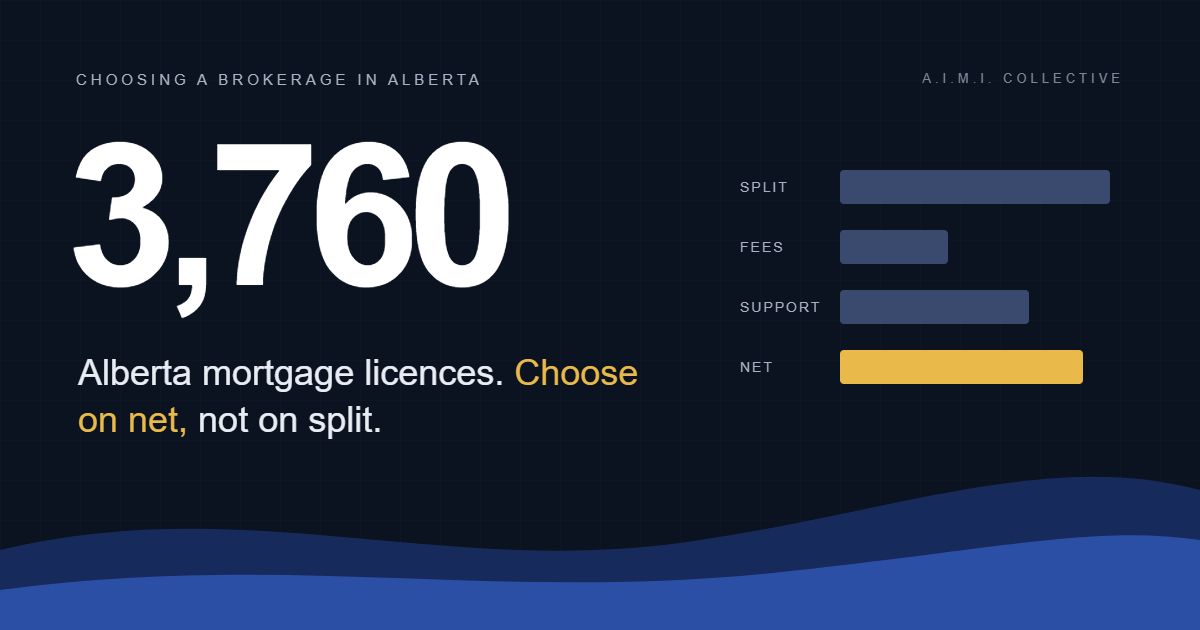
RECA reported 3,760 mortgage licences at the end of September 2025. The Calgary benchmark price was 566,700 dollars in September 2026, slightly lower than a year earlier, with just under four months of supply. In Greater Edmonton the average residential price was 469,602 dollars in August. Compare that with prices well above 900,000 dollars in much of BC and the GTA, and the economics are obvious: an Alberta broker has to fund more files to reach the same dollar volume.
That has three consequences for choosing a brokerage. Volume per file is lower, so per file fees hurt more. Speed matters, because more files means more conditions to clear. And lender tiers matter, because the volume bonus that lifts your finder's fee is easier to reach when your brokerage pools volume across many brokers.
What to compare
Net income, not the headline split. A 95 percent split with a monthly desk fee and a per file charge can net less than an 85 percent split with neither, especially on Alberta file sizes. Ask for the full fee schedule in writing and run last year's files through it. Our guide to comparing offers on net income walks through the math.
Lender access and status. Ask which lenders you can submit to directly, and what volume tier the brokerage holds with each one. Top tier status adds basis points to every file. A brokerage that sends you through an intermediary for half its lenders is taking a cut you will never see on the offer sheet.
Private and alternative lending. Alberta takes private lending seriously. Every mortgage licensee had to complete a mandatory private lending course for the 2025 renewal, and RECA's proposed rule changes include a requirement that licensees represent the lender, never the borrower, in private lender deals. Those changes have gone to the Minister and are not in force yet, but a brokerage that already runs its private files carefully will not need to scramble when they arrive. Our guide to mortgage investment corporations explains how the biggest private lenders are structured.
Compliance support. RECA expects your brokerage to supervise you, and FINTRAC expects a written compliance program, training and a review every two years. Ask who reviews your files, who tracks your licence and education deadlines, and how quickly someone answers when a file raises a question at 7 at night.
Licences outside Alberta. There is no national mortgage licence. If you have clients moving to BC or Ontario, or you want to write there, a brokerage licensed in all three provinces lets you keep those files instead of referring them away. Our post comparing licensing in BC, Alberta and Ontario sets out what each extra licence takes.
Training and people. Weekly lender training, a team that shares declined files and how they were placed, and senior brokers who will look at your deal are worth more than any marketing package. Ask to sit in on a session before you sign.
How a transfer works with RECA
Moving brokerages in Alberta is done through myRECA. You give written notice to your current broker, then the new brokerage starts the transfer from its side and you complete the application and pay the fee. Plan the timing around your pipeline, because in RECA's framework written service agreements are between the client and the brokerage, not the individual licensee. Clients can move with you only if your current brokerage agrees to end the agreement, and any money held in trust goes where the clients direct in writing. Update or remove all advertising that names your old brokerage straight away.
If you are licensed but thinking about the upgrade from associate to broker, you need two years of licensed experience within the last five and the Mortgage Brokers Program with at least 70 percent on the final exam. Running your own brokerage also requires errors and omissions insurance of at least 500,000 dollars per claim and 1 million in aggregate, including fraud coverage.
Questions to ask on the first call
- What would last year's files have netted me here, after every fee?
- Which lenders do I submit to directly, and at what tier?
- Who reviews my private and alternative files, and how?
- Who tracks my RECA renewal, relicensing education and FINTRAC training?
- Can I hold licences in BC and Ontario through you as well?
- What happens to my in progress files if I leave?
Where to start
Our pages on brokering in Calgary, Edmonton and across Alberta cover the local market, and our guide to Alberta licensing and the annual renewal covers the RECA side. If you want to see what your own numbers would look like with A.I.M.I. Collective, book a discovery call.
Figures are from RECA, CREB and the Realtors Association of Edmonton as published in September and October 2026. RECA's proposed rule changes are described as proposed and may change before they take effect. This is general information, not legal advice.