FHSA is searched about 41,000 times a month in Canada, more than almost any other home buying term. First time buyers are hearing about it from friends, banks and social media, and they come to you with half the rules. This guide puts every federal first time buyer program in one place, how they stack, and what to check on the file.
The 2026 toolkit at a glance
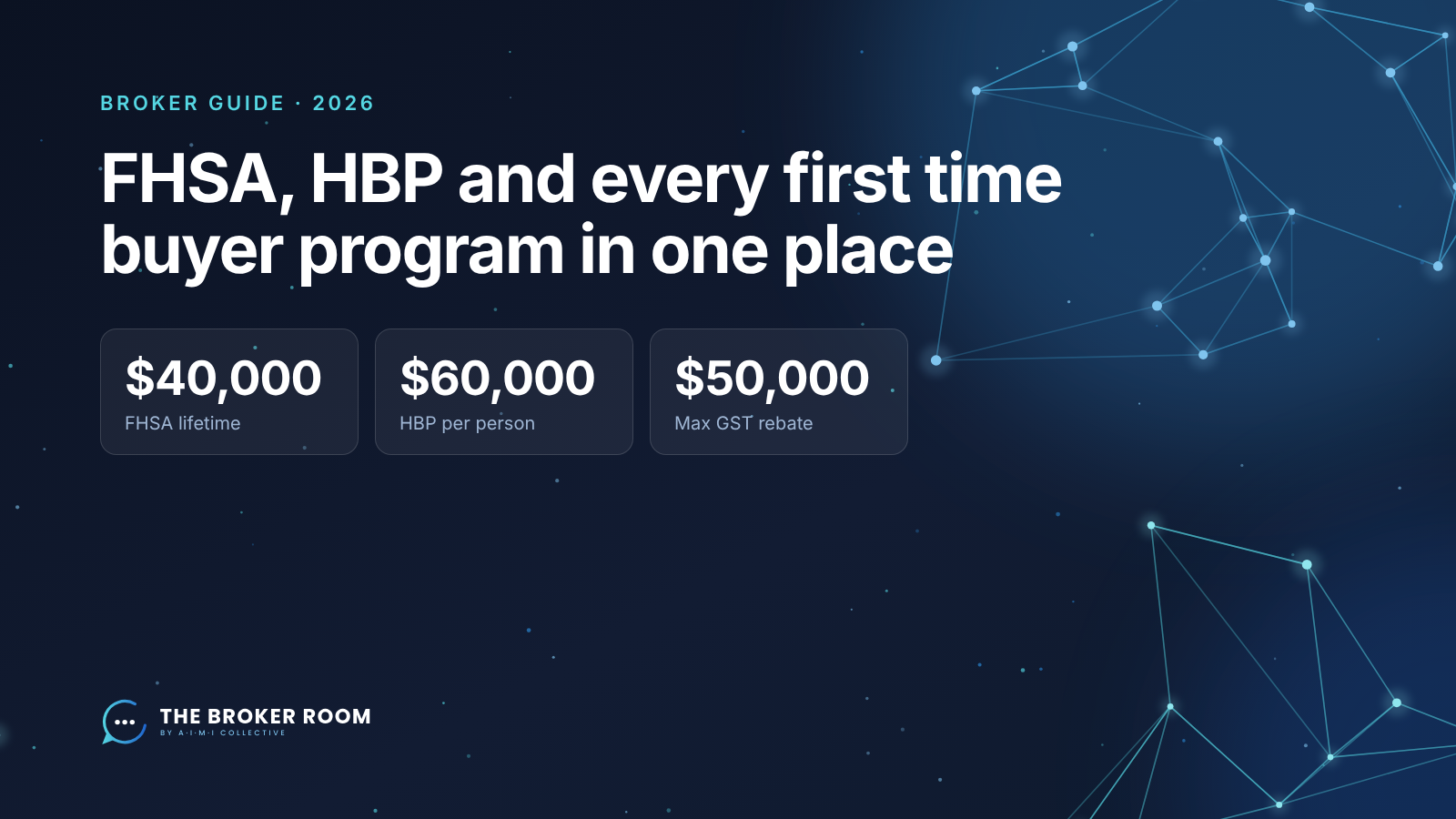
- First Home Savings Account (FHSA): $8,000 a year, $40,000 lifetime, tax free qualifying withdrawals.
- RRSP Home Buyers' Plan (HBP): withdraw up to $60,000 per person, repaid over up to 15 years.
- First Time Home Buyers' Tax Credit: a $10,000 amount worth up to $1,500 in federal tax.
- First time home buyer GST rebate: full GST relief on new homes up to $1 million, to a maximum of $50,000, phased out at $1.5 million.
- 30 year amortization: available on insured mortgages for first time buyers.
- First Time Home Buyer Incentive: closed. More on that below.
FHSA: the rules clients get wrong
- Room starts when the account opens. Contribution room only begins in the year the first FHSA is opened, so a client who plans to buy in two or three years should open one now.
- Carry forward is capped. Unused room carries forward, but only up to $8,000, so the most a client can put in one year is $16,000.
- Qualifying withdrawal. The client completes CRA Form RC725 and gives it to the FHSA issuer. They must be a first time buyer at the time of withdrawal, have a written agreement to buy or build a qualifying home before 1 October of the following year, be a Canadian resident, and intend to live in the home within one year.
- Timing. The home cannot be acquired more than 30 days before the withdrawal. Plan the withdrawal before closing, not after.
- Closing the account. The FHSA must close by the end of the year of its 15th anniversary, the year the client turns 71, or the year after the first qualifying withdrawal, whichever comes first.
Home Buyers' Plan: the repayment clients forget
Clients can withdraw up to $60,000 from their RRSP under the HBP. For a first withdrawal between 2022 and 2028, repayments start in the fifth year after the withdrawal year and run over up to 15 years. Any year the client repays less than the minimum, the shortfall is added to their taxable income. The HBP balance appears with the Notice of Assessment, so check it on files where the client used the plan before.
Stacking them on one purchase
The FHSA and the HBP can both fund the same home. A couple who each use the full FHSA and HBP limits could bring up to $200,000 in contributions to the down payment, before any investment growth, plus the tax credit and, on a new build, the GST rebate. Document every source of funds on the file the same way you would any down payment.
First Time Home Buyers' Tax Credit
The home buyers' amount on line 31270 lets an eligible buyer claim $10,000, which reduces federal tax by up to $1,500. It is non refundable, so it only helps a client who owes federal tax, and co buyers can split it. Unlike the GST rebate, it applies to resale homes too.
GST rebate on new homes
The first time home buyers' GST/HST rebate refunds all the GST, or the federal part of the HST, on a new home up to $1 million, to a maximum of $50,000. It phases out evenly to nil at $1.5 million. The builder agreement must be signed on or after 27 May 2025 and before 2031, the buyer must be at least 18 and a citizen or permanent resident, and it is once per lifetime. Ontario has its own provincial rebate on top, so confirm the details with the CRA for each client.
The First Time Home Buyer Incentive is gone
CMHC's First Time Home Buyer Incentive closed to new submissions on 21 March 2024, and no new approvals were granted after 31 March 2024. It is still searched about 16,000 times a month, so expect questions. For clients who already have it, remember it is a shared equity mortgage that must be repaid in full after 25 years or on sale. Porting the mortgage, a partial release of security and some breakup buyouts also trigger repayment, so flag it on any refinance, switch or port.
What Budget 2026 proposes
Budget 2026, tabled on 5 November, proposes raising the price cap for optional mortgage insurance on deals with 20 percent or more down from $1 million to $1.5 million, with 30 year amortization on those deals when at least one borrower is a first time buyer or the home is newly built. These are proposals, not rules yet, so confirm with lenders and insurers before quoting them.
File checklist for first time buyers
- Confirm first time buyer status for each program; the definitions are similar but not identical.
- Get FHSA and RRSP statements, and plan the withdrawal timing against the closing date.
- Check any existing HBP balance on the Notice of Assessment.
- On a new build, check the agreement date and price for the GST rebate.
- Flag any old First Time Home Buyer Incentive before a refinance, switch or port.
- Send tax questions to the client's accountant.
Quick answers in The Broker Room
- What are the FHSA contribution limits and withdrawal rules for buying a home?
- How does the FHSA work for a down payment, and can clients use it with the HBP?
- How do Home Buyers' Plan repayments work, and what happens if a client misses one?
- What is the first time home buyer GST rebate on new homes, and who qualifies?
- What is the First Time Home Buyers' Tax Credit, and how much is it worth?
- Is the First Time Home Buyer Incentive still available?
Working a first time buyer file and stuck on a rule? Ask it in The Broker Room. Every brokerage is welcome.
Sources: CRA, FHSA withdrawals and contributions; CRA, HBP repayments; CRA, line 31270; CRA, first time home buyers' GST/HST rebate; CMHC, First Time Home Buyer Incentive. General information, not tax or financial advice.